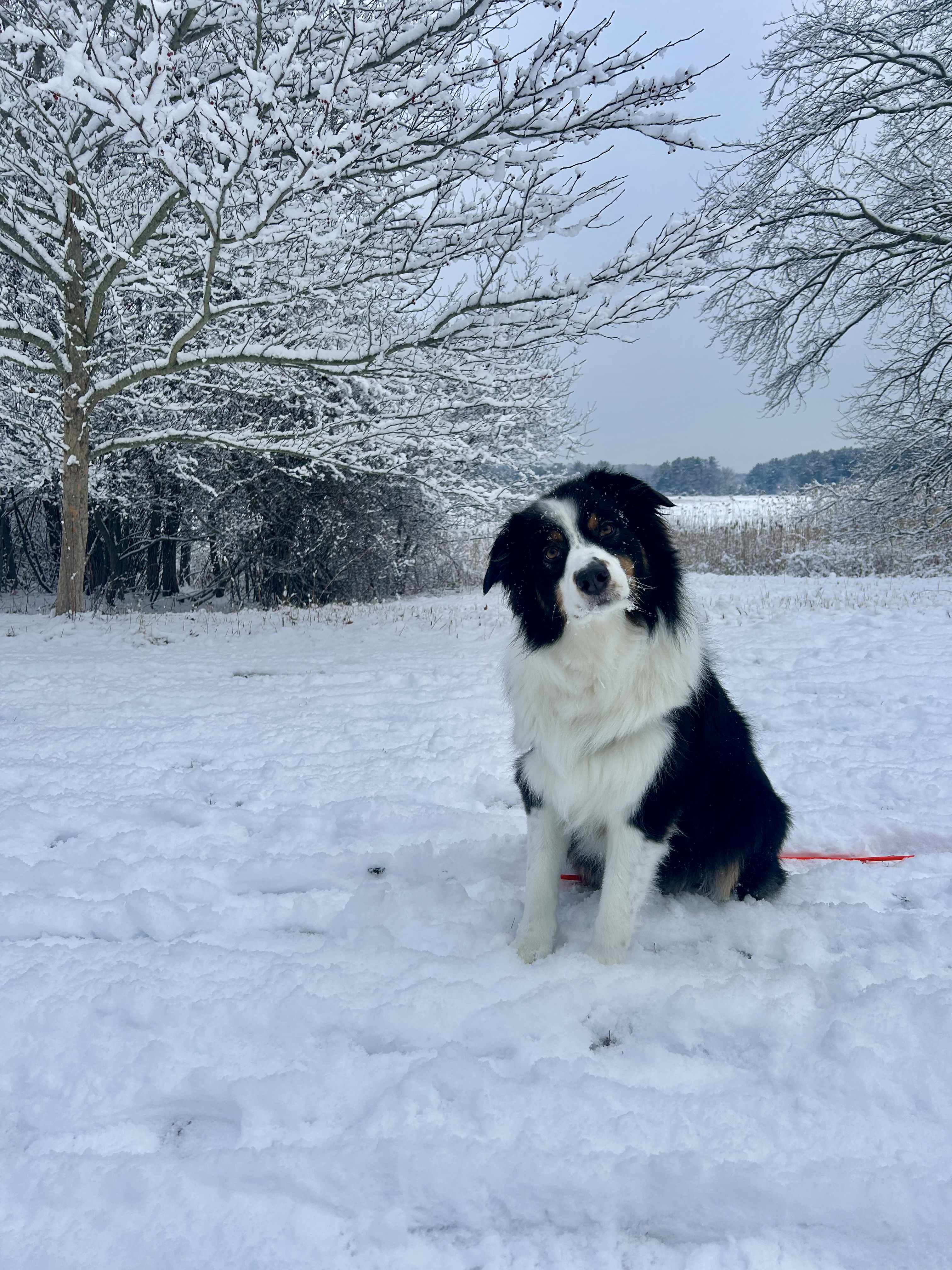
Australian Shepherds are hard wired for pattern recognition. It's how they keep a herd moving and avoid chaos.
Gus, my "stay at home aussie" (current herd: two humans, zero sheep), is the same way. He notices when something changes. A sound across the street that doesn't belong. A shift in my routine.
He pauses, watches, decides if it matters… and then reacts.
He knows the difference between me getting ready for a walk and me getting ready to go out to dinner. It's not one big cue. It's the details.
Sneakers vs. heeled boots.
Leggings vs. "real pants."
Makeup or nah.
He also knows cheese is worth sprinting to the kitchen for the second the fridge opens. Asparagus? Not even worth lifting his head. (He's not wrong.)
The longer I've worked in tech, the more I've realized… this is the job too.
Not overreacting to every little signal.
Not treating every question like it's a production incident.
Not spinning up a whole "war room" for every customer escalation.
It's watching for what repeats and going: oh. let's fix that.
Because most big problems in tech don't show up as one dramatic, unexpected disaster.
They show up as:
- the same question asked five different ways
- a feature that technically works but always needs explaining
- rushed feature updates but no confirmation on why the customer is asking for the change
- "this should be simple" becoming everyone's least favorite phrase
Individually, it's easy to shrug off. Together, it's a pattern.
Here are a couple I've seen in the corporate field.
The question that wouldn't die
Early in a product launch, I kept hearing the same question from different AEs:
"Wait… how is this actually different than [competitor]?"
And every time someone asked, the answer came out slightly differently depending on who they talked to.
Which is how seller confidence evaporates. Not in some dramatic way. More in a quiet, steady drip. Until suddenly everyone is wordsmithing on the fly and hoping the prospect doesn't notice.
That repetition is the pattern.
Three people asking the same question isn't coincidence. It's a signal that we were missing alignment.
So we aligned as a leadership team, built a one-pager, ran a quick 15-minute session, and the talk tracks instantly got cleaner and more consistent.
To my knowledge, no one got smarter overnight.
But we stopped making people freestyle something we hadn't fully agreed on.
The demo that looked great… and still didn't land
Another pattern I started noticing came up in deal reviews.
Demos would feel solid. The team showed up prepared. The product looked good. Everyone would leave like, nice, that went well.
And then… the prospect would go quiet.
At first it felt random. But it wasn't. The data showed it wasn't.
The pattern was consistent: we kept showing our most advanced workflows to teams that weren't even asking for that yet. We were giving them the director's cut when they needed the trailer.
We were answering questions they hadn't asked.
So we tightened up discovery, asked better questions earlier, and made the demo match what the buyer actually cared about.
And suddenly? Demos started landing. Deals started moving.
Most of the time, the real issue isn't effort. Or talent. Or people "not doing enough."
It's misalignment. Miscommunication. A bunch of smart people pulling in slightly different directions.
And honestly, those are fixable problems… if you catch the pattern early.
When you do, nothing dramatic happens. Things just move smoother than they would have otherwise.
No hero moment.
No fire drill.
Which to me, is the goal. Because I love momentum, not panic. I'd rather build something that runs smoothly than spend my week putting out the same fire over and over.
Anyway. Herding dogs are apparently the ideal tech mentors. Great at spotting patterns, managing a herd, and showing up exactly when cheese is involved.